Current study · SSHRC Insight Development Grant
Holding pedagogy and AI systems in productive tension: Designing sociotechnical practices for AI-mediated learning
Generative AI now mediates a growing share of academic work, but its integration remains pedagogically opaque: students lean on unsanctioned tools outside institutional governance while universities invest in sanctioned ones that sit at the margins of coursework. The study calls this the sociotechnical integration gap, and asks how AI systems and pedagogy can be brought into a co-productive relation in graduate education.
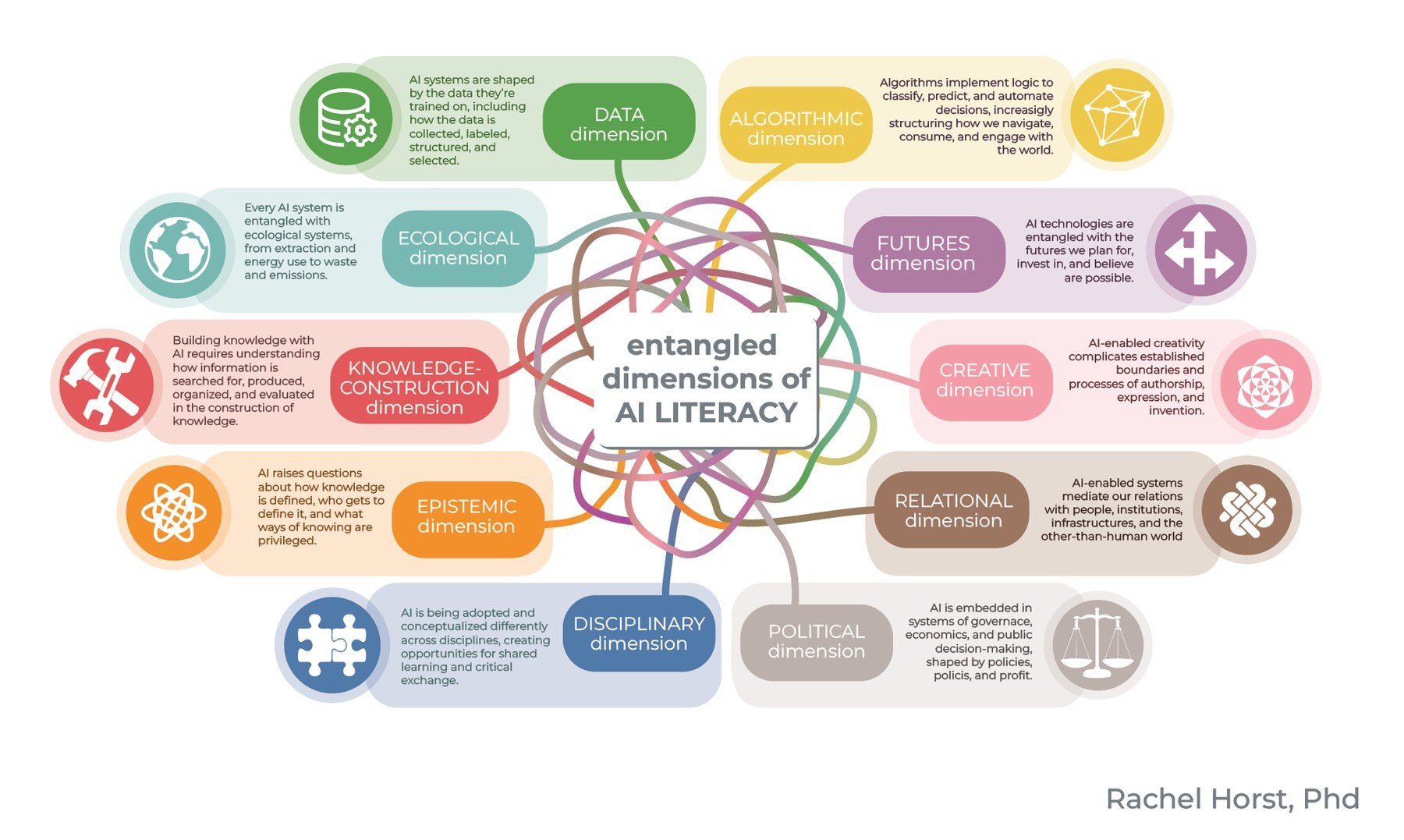
It treats AI literacy not as a set of transferable skills but as a sociotechnical practice enacted through epistemic agency — the situated exercise of judgment, ethical deliberation, and responsible refusal in AI-mediated knowledge work. The site is UBC’s Master of Educational Technology programme, and the instrument is HelpMe, a course-embedded retrieval-augmented system whose interaction traces make patterns of use, verification and refusal visible as they happen.